
Access gates are designed to prevent unauthorized entry to certain areas. If it were this straightforward, one gate model would suffice for all situations. In reality, however, there are numerous models, and selecting the right one for your specific needs can be challenging. In this article, we’ll review the key factors you should consider to find the gate that best suits your requirements.
Gates generally have two primary functions aimed at preventing misuse: preventing jumping over and preventing tailgating. Often, the more effectively you want to restrict these misuse opportunities, the more challenging it becomes to ensure smooth passage through the gate and/or the higher the cost rises.
Gate models can be categorized according to these misuse prevention capabilities: the importance of height and the ease of passage. Let’s examine each factor in detail.
The importance of height
Gate height is one of the most critical factors affecting the likelihood of gate misuse. Generally speaking, the higher the gate, the less likely unauthorized users will attempt to jump over it.
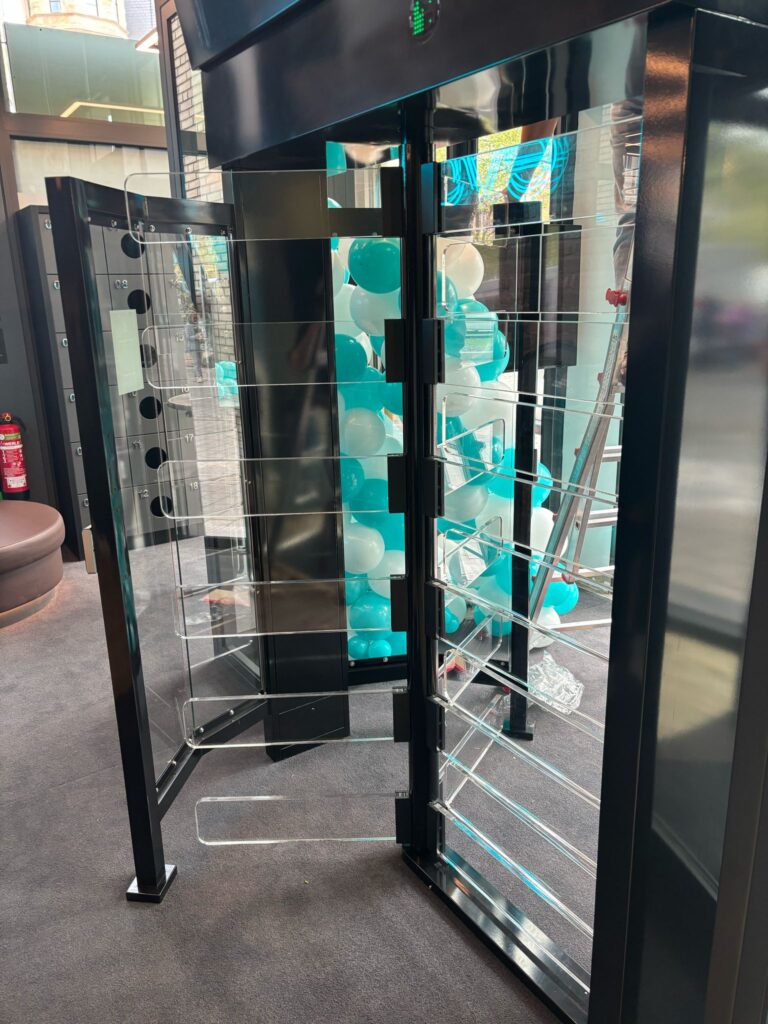
Gate heights typically vary from waist height to over two meters tall. In certain locations, such as supervised reception desks or stadium entrances, gate height may not be as critical a factor. Conversely, in situations where a physical barrier is important, such as on construction sites or in gyms, lower gates may not provide sufficient protection against jumping over.
Higher gates typically cost more and, depending on the model, may be heavier, which can affect usage speed compared to lower models.
Ease of passage
Ease of passage refers to how smoothly and quickly a person can pass through the gate.
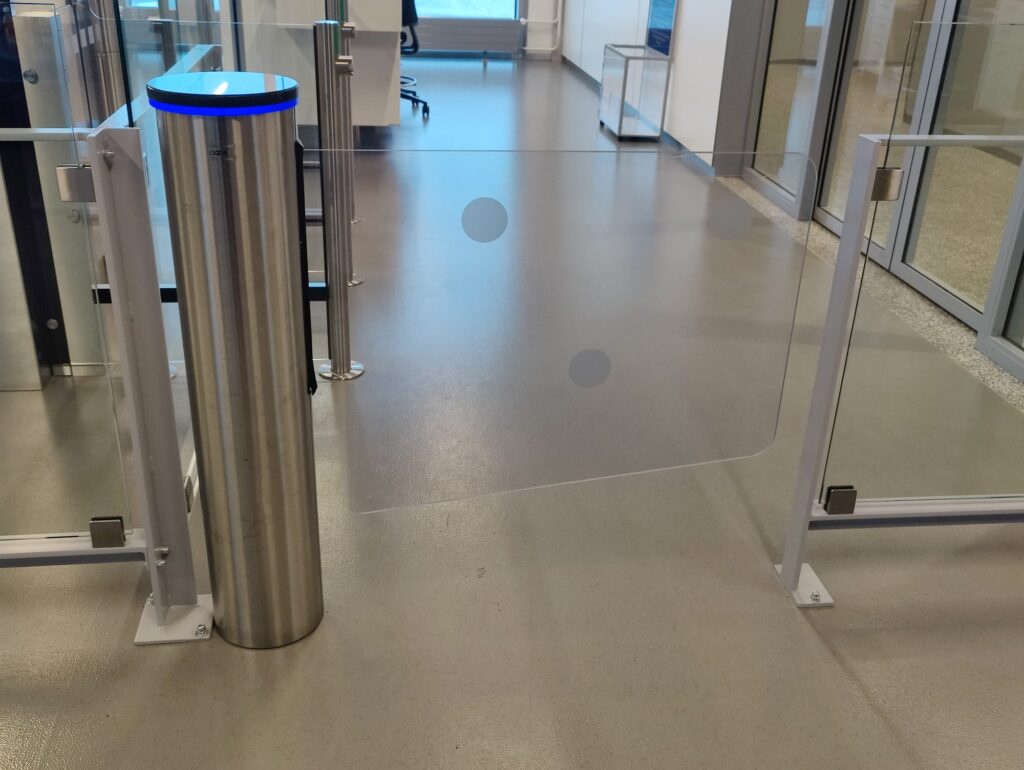
As an example of a completely unrestricted gate, consider the GL A1 swing gate model commonly used at airports. This model can be opened and left open, allowing large crowds to pass freely, after which the gate closes. However, a disadvantage of swing gates is that they don’t enable tracking of individual passages and weren’t designed for this purpose. Some gate models allow tailgating – sometimes as an intentional design feature, but often as an undesirable characteristic.
For comparison, consider high-security secure gates, which are significantly more precise in terms of individual passage monitoring. In these systems, a user must authenticate at a reader outside, and upon entry, weight and infrared sensors ensure only one person passes through at a time. When exiting, the person may be asked to re-authenticate at a reader inside the gate. Although passage through these gates is slower, they offer nearly 100% certainty that each passage is individually recorded.
What gate suits your needs?
Once these factors are understood, you must decide which is more important: passage fluidity or prevention of misuse. Both characteristics can be improved to a certain extent, but this often increases costs as well.
In some locations, such as data centers and nuclear power plants, fast and effortless passage is often not the primary goal. In these sites, the main priority is ensuring misuse doesn’t occur at all.
Conversely, in places like swimming pools and gyms where reception is located directly near the gates, preventing misuse doesn’t have to be the gates’ sole responsibility. Staff and, for example, video surveillance can effectively support and compensate for potential gate weaknesses.
Choosing the right gate model can be challenging, but it’s critically important to get maximum value from your significant investment. For more information on this topic, read our article Stockholm Metro: Perfect yet imperfect gates. If you’re uncertain about your choice or want confirmation of your decision, we recommend contacting our experienced professionals. They’re ready to help you find the solution that perfectly fits your needs.